

On this page
- Important Disclaimer
- The Mental Health Crisis in India
- Why Online Therapy is Gaining Ground
- How Online Therapy Works in India
- Is Online Therapy as Effective?
- Cultural Considerations in India
- Online vs Traditional Therapy
- What to Look for in a Platform
- The Future of Mental Healthcare
- References & Citations
- About the Author
Online therapy in India is clinically as effective as in-person therapy and costs 30 to 50% less per session. A 2021 meta-analysis found no significant difference in outcomes between video-based and face-to-face therapy. Sessions typically range from ₹500 to ₹2,500 online versus ₹1,500 to ₹5,000 in person, making professional mental health support accessible to millions across India.

Co-founder, Therapy Council
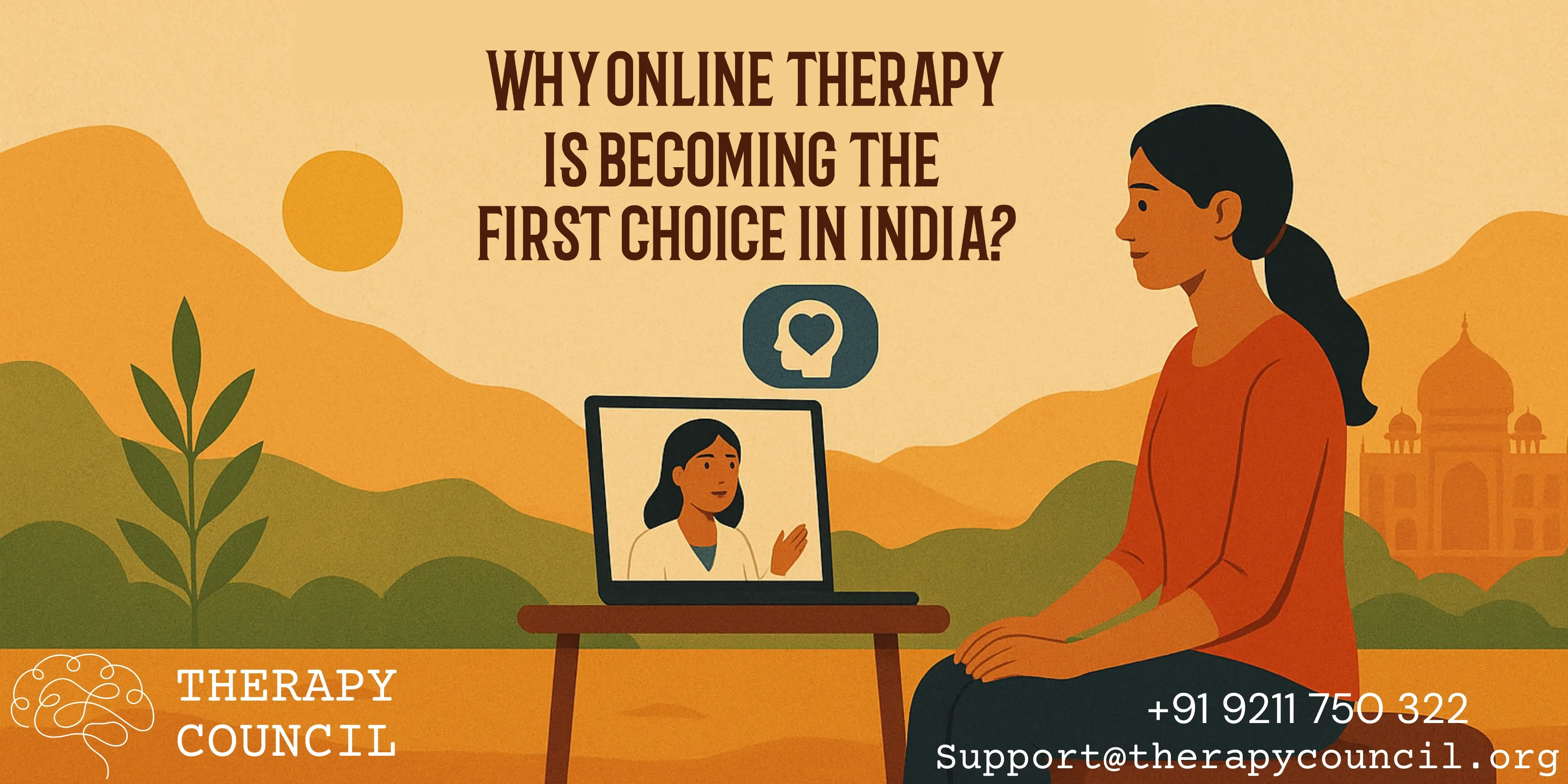
Five years ago, the idea of discussing your deepest anxieties with a therapist over a video call seemed impersonal, perhaps even ineffective. Today, online therapy in India has transformed from a pandemic necessity to the preferred choice for millions seeking mental health support.
The numbers tell a compelling story. India's online therapy market grew by 320% between 2020 and 2023, according to a report by RedSeer Consulting. What started as a temporary alternative has become the primary way Indians access mental healthcare. But this shift isn't just about convenience. It represents a fundamental change in how we approach mental health in a country where stigma, accessibility, and affordability have long been barriers to care.
The Mental Health Crisis in India
India accounts for nearly 15% of the global mental health burden, according to the World Health Organization. The National Mental Health Survey of India found that nearly 10% of the population suffers from mental disorders, yet the treatment gap exceeds 70%.
The statistics are sobering:
- One in seven Indians were affected by mental health issues in 2017, according to The Lancet Psychiatry
- India has only 0.75 psychiatrists per 100,000 people, far below the WHO recommendation of 3 per 100,000
- 56 million Indians suffer from depression and 38 million from anxiety disorders
- Suicide rates have increased by 7.4% between 2019 and 2021, per National Crime Records Bureau data
Traditional barriers have kept millions from seeking help: fear of judgment, lack of qualified professionals, prohibitive costs, and limited access in tier-2 and tier-3 cities. Online therapy is dismantling these barriers one video session at a time.
Why Online Therapy is Gaining Ground in India
Accessibility Across Geography
Traditional therapy requires qualified mental health professionals within commuting distance. In India, where 80% of mental health professionals are concentrated in urban areas, this leaves vast populations underserved.
Online therapy eliminates geography as a barrier. A person in Bhopal can access a trauma specialist from Mumbai. Someone in Shillong can work with a therapist who speaks their language and understands their cultural context. A 2022 study in the Indian Journal of Psychiatry found that telepsychiatry significantly improved access to care in rural and semi-urban areas.
Anonymity Reduces Stigma
Mental health stigma remains pervasive in India. A 2021 study published in the Asian Journal of Psychiatry found that 47% of Indians would be uncomfortable if their family knew they were seeing a therapist.
Online therapy provides a layer of privacy that traditional therapy cannot. There's no risk of running into someone you know in a clinic waiting room. Your neighbors won't see you entering a psychiatrist's office. You can attend sessions from the privacy of your home, reducing the social anxiety associated with seeking help.
This anonymity is particularly crucial for young professionals, students, and those from conservative families where mental health is still misunderstood or dismissed.
Cost-Effectiveness
Traditional therapy in India's metropolitan cities costs between ₹1,500 to ₹5,000 per session, often without insurance coverage. Travel costs and time off work add to the expense.
Online therapy platforms typically offer sessions ranging from ₹500 to ₹2,500, with many providing sliding scale fees based on income. The elimination of commute saves both money and time. Some platforms offer chat-based therapy at even lower price points, making mental health support accessible to students and those with limited budgets.
A 2021 report by the Indian Council of Medical Research noted that teletherapy reduced the overall cost of mental healthcare by approximately 40% compared to in-person treatment.
Flexibility for Busy Lives
India's work culture is demanding. Professionals often work 50-60 hour weeks. Taking time off for therapy appointments can be complicated, requiring explanations and potentially judgment from employers.
Online therapy offers early morning, late evening, and weekend slots. You can attend a session during your lunch break without leaving your office. Parents can schedule sessions during school hours. The flexibility makes consistent therapy achievable for those with demanding schedules.
Continuity of Care
Indians frequently relocate for education, work, or family reasons. Traditional therapy gets disrupted with each move, requiring the difficult process of finding a new therapist and rebuilding trust.
With online therapy, your therapist travels with you. A student moving from Delhi to Bangalore for college can maintain their therapeutic relationship. An IT professional transferred to Hyderabad doesn't lose months of progress. This continuity significantly improves treatment outcomes.
How Online Therapy Works in India
Platform Selection
Online therapy in India is delivered through various platforms, from established telehealth services to specialized mental health apps. These platforms typically offer:
- Video sessions via secure, encrypted connections
- Chat-based therapy for those uncomfortable with video
- Phone consultations for privacy or connectivity concerns
- Self-help resources and guided programs
- Prescription services where psychiatric medication is needed
Reputable platforms verify therapist credentials, ensure data privacy compliance, and provide secure payment options.
Finding the Right Therapist
Most platforms allow you to browse therapist profiles, including:
- Qualifications and specializations
- Years of experience
- Languages spoken
- Therapeutic approaches (CBT, psychodynamic, etc.)
- Areas of expertise (anxiety, relationships, trauma, etc.)
Many offer a free initial consultation to assess fit. This "try before you commit" approach reduces the intimidation factor for first-time therapy seekers.
The Session Experience
Online therapy sessions mirror in-person therapy in structure and effectiveness. Sessions typically last 45-60 minutes and follow the same therapeutic protocols.
Initial sessions focus on assessment and goal-setting. Subsequent sessions address specific issues using evidence-based therapeutic techniques. Your therapist may assign homework, provide resources, or suggest exercises between sessions.
The Indian Journal of Psychological Medicine published research in 2022 showing that therapeutic alliance (the trust and connection between therapist and client) forms equally well in online and in-person settings.
Is Online Therapy as Effective as In-Person?
The research is clear: online therapy works.
A 2021 meta-analysis in the Journal of Medical Internet Research examined 17 studies involving over 2,000 participants. It found no significant difference in effectiveness between online and face-to-face therapy for conditions including depression, anxiety, and PTSD.
The American Psychological Association reported in 2022 that online CBT (Cognitive Behavioral Therapy) was equally effective as in-person CBT for treating anxiety and depression, with some studies showing even higher completion rates for online programs.
A 2020 study specific to the Indian context, published in the Indian Journal of Psychiatry, found that teletherapy for depression and anxiety showed comparable outcomes to traditional therapy, with client satisfaction rates exceeding 85%.
The key factors determining effectiveness are the same regardless of format: therapist competence, therapeutic alliance, client engagement, and consistency of sessions.
Addressing Common Concerns
Can therapy really work through a screen?
Research consistently shows yes. The therapeutic relationship, which is crucial for outcomes, develops just as effectively online. Many clients report feeling more comfortable opening up from home than in an unfamiliar office.
What about privacy and data security?
Reputable platforms use end-to-end encryption, comply with data protection regulations, and never share your information without consent. In India, look for platforms complying with the Digital Information Security in Healthcare Act (DISHA) and Information Technology Act guidelines.
Are online therapists properly qualified?
Legitimate platforms verify credentials thoroughly. Look for therapists with recognized degrees (M.Phil, MA in Clinical Psychology, MD Psychiatry) from accredited institutions and registration with the Rehabilitation Council of India (RCI) or Indian Association of Clinical Psychologists (IACP).
What if I need medication?
Many online therapy platforms have psychiatrists who can prescribe medication when needed. Some platforms coordinate with your existing psychiatrist or can help you find one.
What about internet connectivity issues?
Most platforms offer phone-based sessions as backup. Even in areas with moderate connectivity, audio-only sessions can be highly effective. Some therapists also offer chat-based therapy that works with limited bandwidth.
Cultural Considerations in Indian Online Therapy
Language and Cultural Competence
One significant advantage of online therapy in India is access to therapists who speak your language and understand your cultural context. Explaining family dynamics, cultural expectations, or regional customs becomes unnecessary when your therapist shares that background.
Many platforms offer therapy in Hindi, Tamil, Telugu, Bengali, Marathi, Gujarati, Kannada, Malayalam, and other regional languages, removing the barrier of having to express complex emotions in a second language.
Family Involvement
Indian therapy often requires navigating family dynamics. A good online therapist understands the collectivist nature of Indian families, the role of extended family, parental expectations, and generational conflicts specific to the Indian context.
They can help you set boundaries with family while respecting cultural values, address arranged marriage concerns, manage career pressure from parents, or navigate the challenges of living in joint families.
Understanding Indian Context
Western therapeutic models don't always translate directly to Indian experiences. Online therapy platforms increasingly connect clients with therapists trained in culturally adapted approaches that consider Indian social structures, religious beliefs, gender roles, and societal expectations.
Online Therapy vs Traditional Therapy: Making the Choice
Online therapy isn't universally superior. It's differently suited. Here's how to decide:
Choose Online Therapy If:
- You live in areas with limited mental health resources
- Privacy and anonymity are priorities
- Your schedule is unpredictable or demanding
- You're comfortable with technology
- Cost is a significant concern
- You relocate frequently
- You're seeking therapy for the first time and feel intimidated by traditional settings
Consider In-Person Therapy If:
- You're dealing with severe mental health crises requiring immediate intervention
- You prefer face-to-face human connection
- You have reliable access to quality local therapists
- You lack private space for video sessions
- You're uncomfortable with technology
- Your condition benefits from in-person assessment
Many people use a hybrid approach, combining online sessions with occasional in-person meetings.
What to Look for in an Online Therapy Platform
Therapist Credentials
Verify that therapists have legitimate qualifications from recognized institutions. Look for M.Phil or MA in Clinical Psychology, MD Psychiatry, or equivalent degrees. Check for RCI registration or professional body memberships.
Privacy and Security
Ensure the platform uses encrypted video conferencing, secure data storage, and has clear privacy policies. Your therapy records should be confidential and protected.
Transparent Pricing
Reputable platforms clearly display session costs, offer various payment options, and don't have hidden fees. Some offer subscription models or session packages at discounted rates.
Therapist Matching
Good platforms help you find therapists based on your specific needs, preferred language, therapist gender preference, and issues you want to address.
Session Flexibility
Look for platforms offering various session formats (video, phone, chat), flexible scheduling, easy rescheduling options, and backup communication methods.
Customer Support
Reliable platforms have responsive customer support to address technical issues, payment concerns, or scheduling problems.
Crisis Resources
Ensure the platform provides crisis resources and helpline numbers for emergencies, as online therapy is not suitable for acute mental health crises.
Taking the First Step
If you're considering online therapy, know that taking the first step is often the hardest part. Here's how to begin:
- Identify Your Needs: What are you hoping to address? Anxiety, depression, relationship issues, work stress, trauma, or general life navigation?
- Research Platforms: Look at 2-3 reputable platforms. Read reviews, check therapist credentials, compare pricing.
- Book a Consultation: Many platforms offer free initial consultations. Use this to assess whether you feel comfortable with the therapist and platform.
- Be Patient with the Process: Finding the right therapist might take a few tries. Don't give up if the first match isn't perfect.
- Commit to Consistency: Therapy works best with regular sessions. Try to attend weekly or bi-weekly for at least a few months.
- Be Open and Honest: The effectiveness of therapy depends on your willingness to be vulnerable and truthful.
The Future of Mental Healthcare in India
The trajectory is clear. As internet penetration deepens, digital literacy improves, and mental health awareness grows, online therapy will become increasingly mainstream in India.
Government initiatives like the National Tele Mental Health Programme (launched in 2022) signal official recognition of teletherapy's importance. Corporate wellness programs increasingly include online mental health benefits. Educational institutions are partnering with platforms to provide student support.
AI-powered tools are beginning to complement human therapists, offering immediate support between sessions, mood tracking, and personalized coping strategies. However, these tools enhance rather than replace human connection, which remains central to effective therapy.
The stigma around mental health is gradually eroding, particularly among younger Indians. A 2023 survey by YourDOST found that 68% of millennials and Gen Z Indians are willing to try online therapy, compared to just 34% of those over 45.
Your Mental Health Deserves Priority
Mental health isn't a luxury. It's a necessity. Whether you're struggling with diagnosed conditions, navigating life transitions, dealing with relationship challenges, or simply feeling overwhelmed, therapy can help.
Online therapy has made mental health support accessible, affordable, and convenient for millions of Indians who previously couldn't access care. You no longer need to suffer in silence, worry about judgment, or postpone support because of logistics.
Your mental wellbeing deserves the same attention you give to your physical health, career, and relationships. Often, it's the foundation that makes everything else possible.
Ready to Experience Online Therapy with Therapy Council?
Connect with experienced therapists from leading hospitals. Evidence-based CBT, flexible scheduling, IT Act 2000 & DPDP Act 2023 compliant platform.
View Our Affordable Pricing Book Your SessionFound this guide helpful? Share it with friends, family, or colleagues who might benefit from understanding online therapy options.
References & Citations
- World Health Organization. (2022). Mental Health Atlas 2020. Available at: View resource on who.int
- National Mental Health Survey of India. (2016). Prevalence, Pattern and Outcomes. NIMHANS Publication No. 129.
- RedSeer Consulting. (2023). India Online Therapy Market Analysis Report.
- The Lancet Psychiatry. (2017). Mental Health in India: Current Status and Future Directions.
- Asian Journal of Psychiatry. (2021). Mental Health Stigma in India: A Cross-Sectional Study.
- Indian Journal of Psychiatry. (2022). Telepsychiatry in Rural and Semi-Urban Areas: Effectiveness Study.
- Indian Council of Medical Research. (2021). Cost-Effectiveness of Teletherapy in India.
- Journal of Medical Internet Research. (2021). Meta-Analysis of Online vs Face-to-Face Therapy Effectiveness.
- American Psychological Association. (2022). Online Cognitive Behavioral Therapy: Efficacy and Outcomes.
- Indian Journal of Psychological Medicine. (2022). Therapeutic Alliance in Online and In-Person Settings.
- National Crime Records Bureau. (2021). Accidental Deaths and Suicides in India Report.
- Ministry of Health and Family Welfare. (2022). National Tele Mental Health Programme. Government of India.
- YourDOST. (2023). Mental Health Awareness Survey: Generational Attitudes Towards Online Therapy.